Jacquie J Sarah - Writer

Jacquie J Sarah
Profile
Jacquie J Sarah is a Cardiff-based comedy and drama writer with a sharp eye for the chaos of everyday life. Her work blends wit, emotional insight, and razor-sharp dialogue, focusing on stories that are awkward, relatable, and painfully funny.
She’s a BAFTA Connect Member, experienced Script Editor, and Reader, with a deep understanding of structure, tone, and character. Whether she’s writing original material or supporting others to elevate theirs, Jacquie brings clarity, pace, and emotional precision to the page.
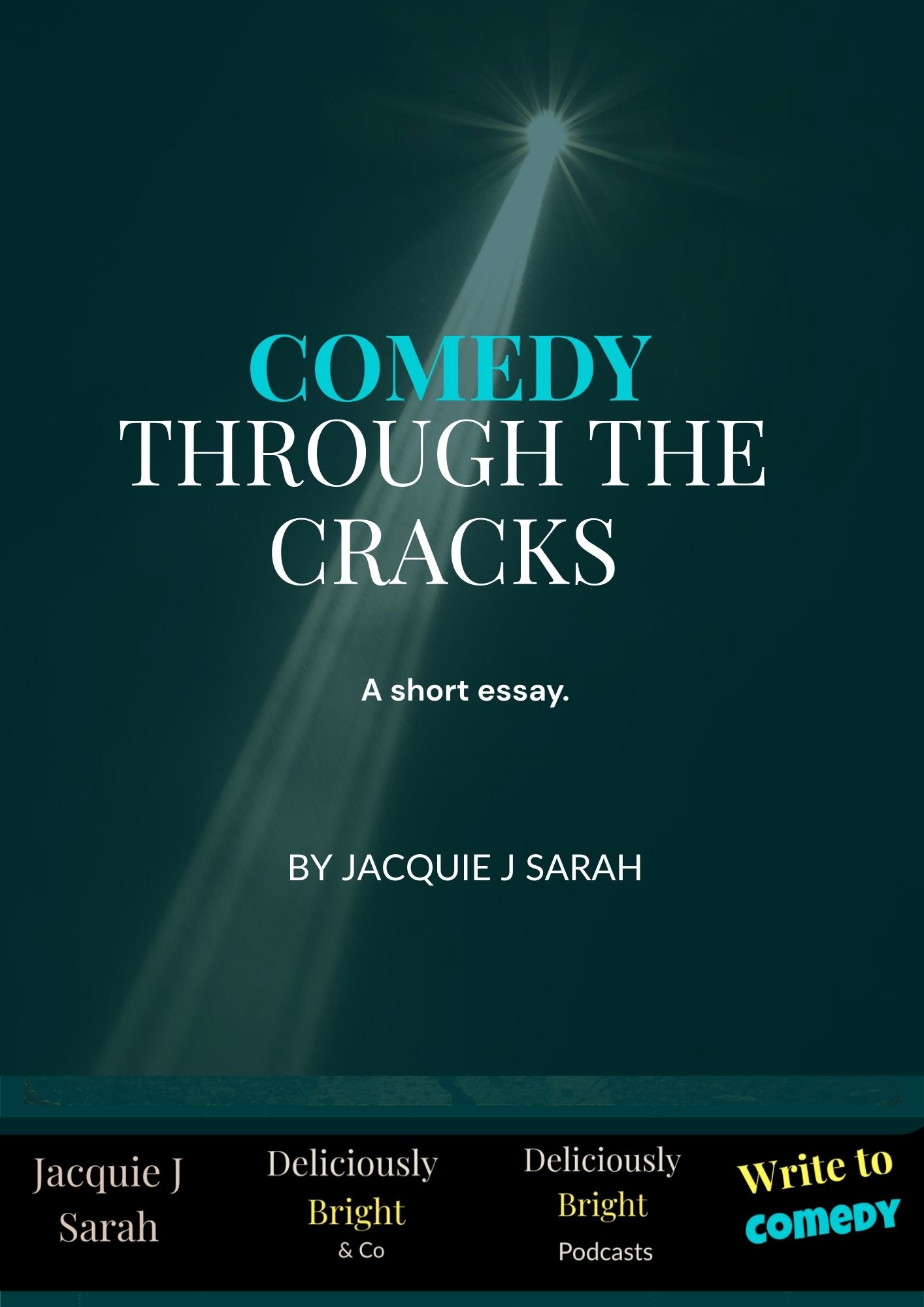
Comedy Through the Cracks
A free exclusive PDF essay.
If life keeps cracking at the edges, you might as well laugh at the draft.
Comedy Through the Cracks is my short, honest take on why comedy endures — and why we need it when we’re one awkward moment away from combusting.
Download it to remember why humour endures (and why we need it more than ever).
Ready to build the life of your dreams?

Let's chat
Ready to work with a coach to uplevel your life and business?
Listen to the
Podcast
view my
services
read the
BLOG
Let's chat
Ready to work with a coach to uplevel your life and business?
Let's learn
Learn at your own pace and make quantum leaps.
Student Love Notes
We've helped so many incredible students to find success as Virtual Assistants...

The VA Business Blueprint helped me to go from feeling completely stuck to starting my business and getting my first client!
Ellen, business name

I enrolled in the VA Services Academy feeling completely lost - within 2 weeks I knew exactly what to offer & what to charge.
Ellen, business name

Beginner to Booked Out was a game-changer for me. Anna and her team are incredible and I'm booked out for the next 3 months!
Ellen, business name
Popular on the Write to Comedy blog...
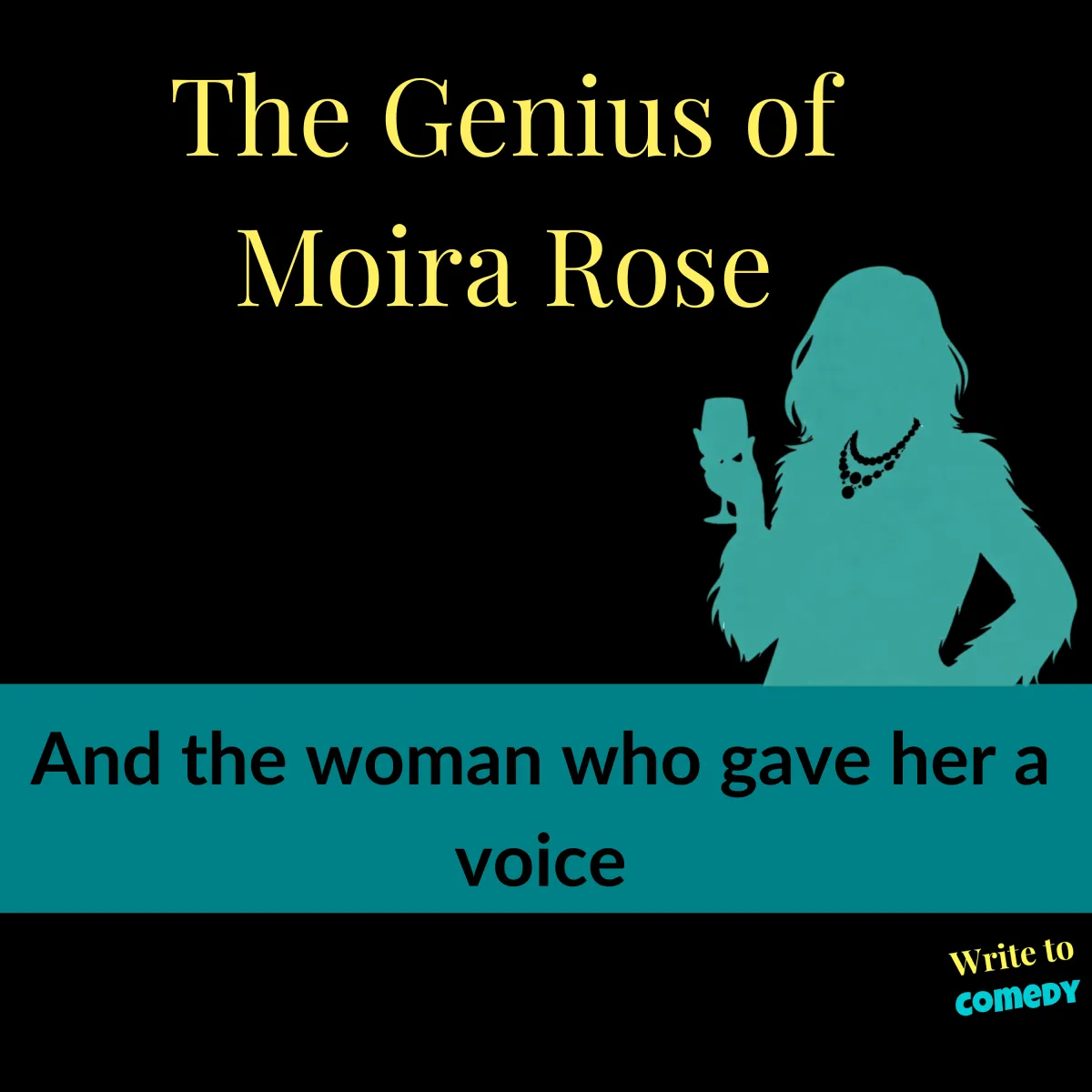
The Genius of Moira Rose:
And the Woman Who Gave Her a Voice
Eight Sitcom Heroes Who Haven’t Aged Well.
Why rewatching feels different now.
The Perfect Comedy Goodbye:
The Endings That Actually Earned It
Recent Podcast Episodes on Deliciously Bright Podcasts
That TV Comedy Podcast Christmas Special 2025
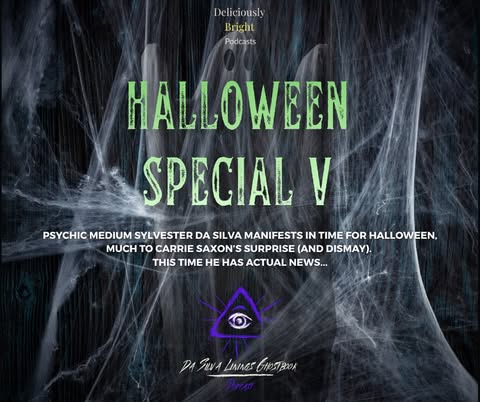
Da Silva Linings Ghostbook Podcast
Halloween 5 2025
New on the blog...
Hope as Rebellion: The Quiet Art of Staying Human
Rather listen than read? Here is the audio for this post.)
Hope has become a bit of a PR problem.
It used to be the noble stuff of speeches and charity campaigns. Now it sounds faintly embarrassing — like someone still clapping for carers long after everyone else went back indoors. Hope has been rebranded as naïve, out of touch, or worse, cringe. We prefer our optimism ironic these days.
But maybe that’s exactly why we need it back. Because if apathy is the new currency, then hope might just be the last act of rebellion left.
The Age of Shrug
It’s strange how quickly “we’re all in this together” turned into “don’t talk to me without booking a slot.”
The pandemic was supposed to forge some great collective empathy. Instead, we emerged blinking into the light, exhausted and transactional. Everything feels slightly meaner, a little more self-serving. Compassion fatigue meets influencer culture.
The same mood hums through social media: a collective shrug disguised as detachment. Doomscrolling has replaced conversation. Irony has replaced sincerity. Even comedy — once the voice of the underdog — often feels like an act of despair wearing a grin.
We laugh at the absurdity of the world, but it’s a tired laugh. The kind that says, “I care, but I’m running out of batteries.”
And yet… the fact that we still joke is its own proof of life. Sarcasm might look like surrender, but it’s often the last pulse check of the hopeful. To mock something, you first have to notice it. You have to believe it’s absurd enough to be worth fixing.
What Hope Isn’t
Hope has been badly marketed. Somewhere down the line, it got lumped in with toxic positivity — all vision boards and manifesting your way out of global collapse.
Real hope isn’t denial. It doesn’t mean ignoring the bad news or pretending everything’s fine. Real hope is grimy. It’s the person still turning up for their shift, the writer still hitting “publish” into the void, the comic still finding a punchline in the dark.
Hope doesn’t say “everything happens for a reason.” It says, “things happen, and I’m still here.”
You can see it most clearly in good comedy. The sharp kind. The kind that doesn’t flinch. Hannah Gadsby, Stewart Lee, Michaela Coel, Frankie Boyle (in a rare moment of tenderness), they all wield humour as evidence that they haven’t given up. The joke isn’t the escape hatch; it’s the proof they’re still inside the burning building, describing the smoke.
Comedy thrives on discomfort, and hope is just its quieter twin. Both refuse to accept that absurdity wins.
Small Acts of Defiance
There’s a misconception that rebellion needs to be loud — slogans, marches, speeches. But the real revolt against apathy might be found in the smallest, pettiest acts of persistence.
Writing something no one asked for.
Being kind in a comment section.
Finishing a story instead of optimising it for SEO.
Choosing to be curious when cynicism is easier.
Every time you create without chasing an algorithm, you perform a tiny act of civil disobedience. You remind the world that human beings are gloriously inefficient.
The machines can generate copy, code, even comedy. What they can’t do is care. They can’t stay up at 2 a.m. wondering if a line lands, or if it’s too honest, or if anyone will even notice. That ache — that awareness — is what makes us human.
Hope lives there, in the awareness. It’s not the certainty that things will get better; it’s the refusal to stop paying attention when they don’t.
The Hope Economy
Of course, even hope is being monetised. You can now download mindfulness apps that promise “curated positivity.” There are AI coaches that send you affirmations in your own voice. The irony is immaculate: we’ve automated encouragement.
But real hope doesn’t scale. It can’t be optimised for engagement. It’s local, handmade, slightly inefficient — like small-batch jam or live comedy.
You see it in the quiet corners of the internet: a poet uploading work to a blog no one reads; a friend sending memes to say “I’m thinking of you”; a group of strangers crowdfunding someone’s rent. These aren’t grand gestures. They’re maintenance — emotional infrastructure for a species that hasn’t given up yet.
The opposite of despair isn’t happiness. It’s contribution.
The Role of Comedy (Again)
Comedy remains one of the purest survival instincts we have. It’s emotional judo — redirecting pain into momentum.
You can’t laugh and give up at the same time.
Laughter demands presence. It’s the opposite of apathy. You can’t automate timing, or teach an algorithm why a pause makes something funnier. It can mimic rhythm but not risk.
Satire, especially, is an act of stubbornness. It’s the artist saying: I still care enough to mock you properly. Whether it’s Have I Got News for You, The Skewer, or Charlie Brooker’s latest state-of-the-nation sigh, the laughter isn’t escapism — it’s witness.
Comedy doesn’t let us off the hook. It drags us back into the conversation. It’s a refusal to tune out.
And maybe that’s the most radical form of hope left: not believing everything will be fine, but staying awake long enough to laugh when it isn’t.
The Myth of the Big Gesture
There’s a reason big “change the world” movements fizzle — they demand energy people no longer have. The trick might be smaller: tending your corner.
Hope isn’t a manifesto. It’s a maintenance plan.
It’s deciding to create one honest thing this week. To forgive someone. To read the long article instead of the summary. To call instead of text. To risk sincerity when irony would score more likes.
If apathy is contagious, so is effort.
And when enough people keep doing small hopeful things, culture shifts in ways data can’t quite measure. Not overnight, but gradually — like light creeping back after a long winter.
The Embarrassment of Hope
It’s unfashionable to talk about hope now. It sounds like a personality flaw, a relic of the pre-doomscroll era. But that’s what makes it powerful. To be hopeful today is to be slightly uncool — and that’s delicious.
We’ve made cynicism a personality trait, but hope takes courage. It asks you to look directly at the chaos and say, “Not yet.”
There’s a line I keep thinking about: “Despair is a luxury.” Because despair assumes you’ve given up trying. Hope, inconveniently, keeps you accountable. (Robert Macfarlane - full quote Despair is a luxury, hope is discipline.)
That’s why it hurts sometimes. Hope isn’t comfort — it’s friction. It’s the voice that says, “You could still do better.”
And in a world that rewards numbness, that’s practically punk.
The Human Throughline
Maybe the future really does belong to the machines. Maybe they’ll write, paint, and compose better than we ever could. But they’ll never know the relief of making something after nearly not.
They’ll never feel the absurd joy of a joke landing, or the intimacy of an audience leaning in, or the small rebellion of still trying when it would be easier to scroll.
That’s hope.
Not the glossy kind with a hashtag. The ragged, necessary, quietly defiant sort. The kind that keeps humanity ticking when logic says it shouldn’t bother.
Hope isn’t a feeling. It’s a refusal.
A daily, deliberate not yet.
What do you think? Let me know in the comments here.
You may also like:

Apathy Machines: How AI Might Not Take Over the World — Just Turn It Grey
AI won’t take over the world. It’ll just make it boring. A sharp essay on apathy, creativity, comedy, and choosing to stay human.

Laughing at the Past: The Problematic Legacy of British Sitcoms (1960s–2010s)
From Steptoe to Fleabag — how British sitcoms from the 1960s to 2010s made us laugh, cringe, and rethink what we find funny.

Fat Characters and Fat Jokes. Why We Need to Get Over Ourselves
From Fat Monica to Mr Bigstuff, comedy has a long history of fatphobia. Here’s why fat characters deserve better — and how TV can write them with dignity and humour.

Comedy Through The Cracks - A short essay
Grab your free exclusive download here.