Jacquie J Sarah - Writer
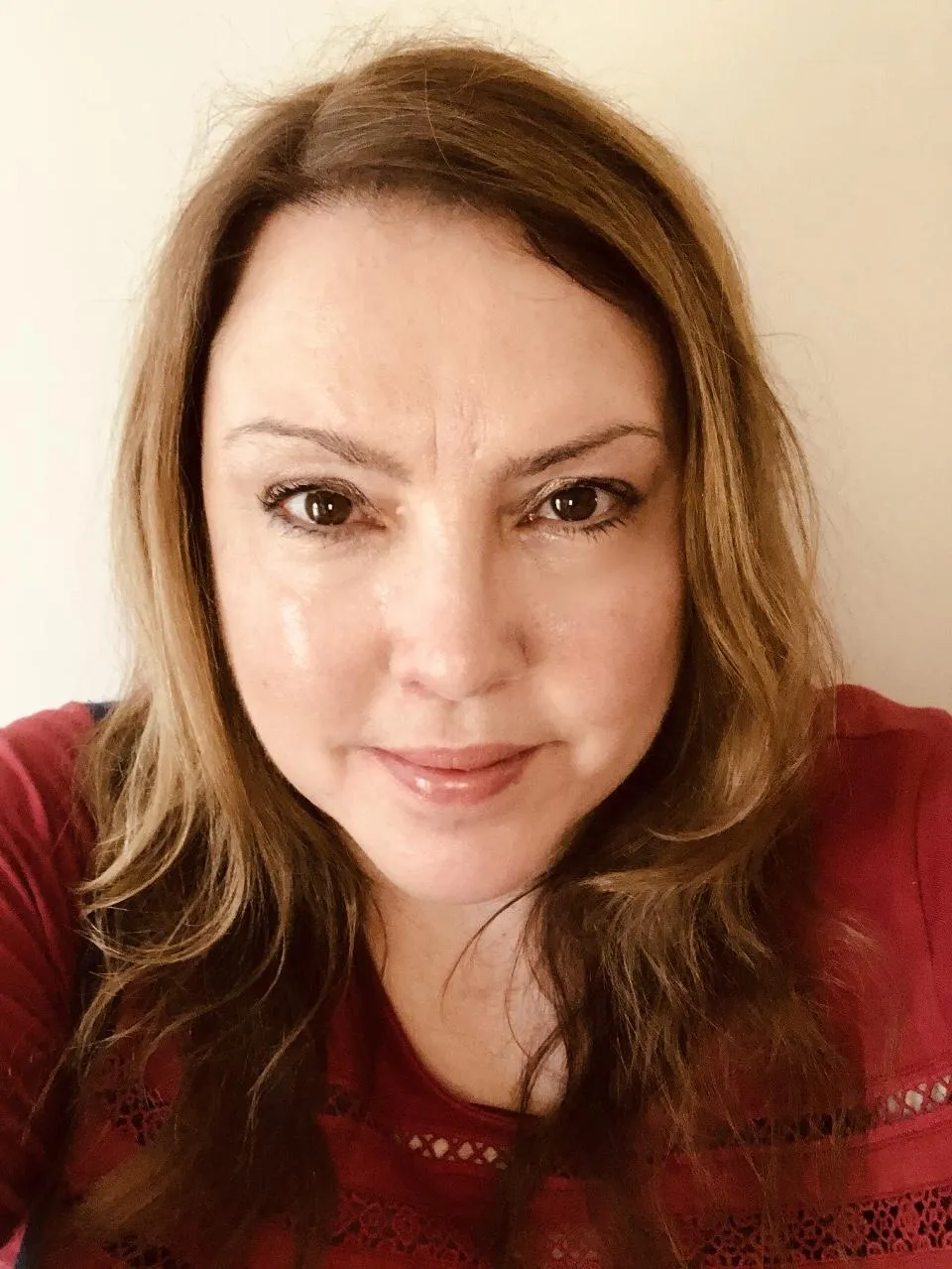
Jacquie J Sarah
Profile
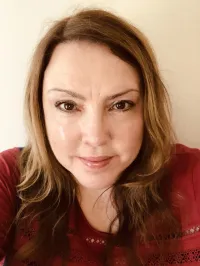
Jacquie J Sarah is a Cardiff-based comedy and drama writer with a sharp eye for the chaos of everyday life. Her work blends wit, emotional insight, and razor-sharp dialogue, focusing on stories that are awkward, relatable, and painfully funny.
She’s a BAFTA Connect Member, experienced Script Editor, and Reader, with a deep understanding of structure, tone, and character. Whether she’s writing original material or supporting others to elevate theirs, Jacquie brings clarity, pace, and emotional precision to the page.
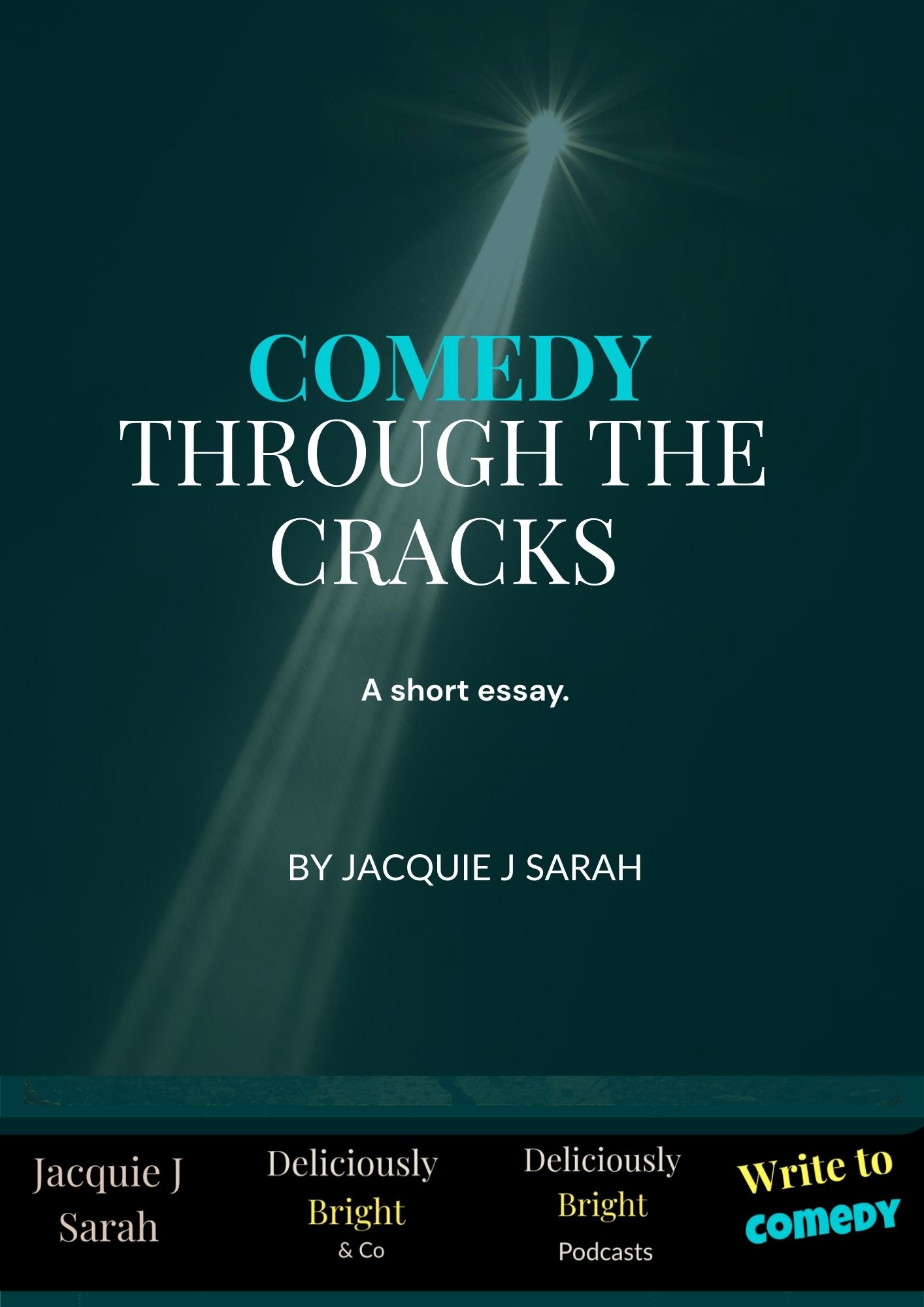
Comedy Through the Cracks
A free exclusive PDF essay.
If life keeps cracking at the edges, you might as well laugh at the draft.
Comedy Through the Cracks is my short, honest take on why comedy endures — and why we need it when we’re one awkward moment away from combusting.
Download it to remember why humour endures (and why we need it more than ever).
Ready to build the life of your dreams?

Let's chat
Ready to work with a coach to uplevel your life and business?
Listen to the
Podcast
view my
services
read the
BLOG
Let's chat
Ready to work with a coach to uplevel your life and business?
Let's learn
Learn at your own pace and make quantum leaps.
Student Love Notes
We've helped so many incredible students to find success as Virtual Assistants...

The VA Business Blueprint helped me to go from feeling completely stuck to starting my business and getting my first client!
Ellen, business name

I enrolled in the VA Services Academy feeling completely lost - within 2 weeks I knew exactly what to offer & what to charge.
Ellen, business name

Beginner to Booked Out was a game-changer for me. Anna and her team are incredible and I'm booked out for the next 3 months!
Ellen, business name
Popular on the Write to Comedy blog...
The Genius of Moira Rose:
And the Woman Who Gave Her a Voice
Eight Sitcom Heroes Who Haven’t Aged Well.
Why rewatching feels different now.
The Perfect Comedy Goodbye:
The Endings That Actually Earned It
Recent Podcast Episodes on Deliciously Bright Podcasts
That TV Comedy Podcast Christmas Special 2025
Da Silva Linings Ghostbook Podcast
Halloween 5 2025
New on the blog...
Where Are the Women? Comparing Female Representation in UK and US Comedy
Rather listen than scroll? Here is the audio of the post.
From biting satire to awkward mockumentary to broad slapstick, comedy has always had the power to say something sharp, even while making us laugh. But when it comes to who gets to say it, and how, the record for women in comedy is a bit less funny.
Across both UK and US television, comedy has long been dominated by male voices, in front of and behind the camera. Women have historically been cast as love interests, nags, or eye-rolling foils. The good news? Change is happening. But the pace and tone of that change varies wildly depending on which side of the Atlantic you’re watching from.
Let’s take a look at how female representation has evolved (and sometimes stalled) in UK and US comedy and what it tells us about whose stories are still being prioritised.
📺 The Sitcom Landscape: A Tale of Two Traditions
The US and UK have very different comedy ecosystems.
American sitcoms are often built for syndication: long runs, writers’ rooms, studio systems, and wide appeal. British sitcoms tend to favour shorter series, tighter casts, and often, one or two core creators writing everything themselves.
This difference matters. In the US, a woman with a strong comedic voice might have access to a staff writing job. In the UK, she might need to write, star in, and pitch the entire show herself.
That contrast helps explain why the US has produced more female-led comedies inside the system, while the UK often relies on female writer-performers to break through, against the odds.
🇺🇸 US Comedy: Breaking Ground from the Writers' Room
American television has arguably done more — and earlier — to carve out space for complex, flawed, and funny female characters.
From the 1970s onwards, shows like:
The Mary Tyler Moore Show
Roseanne
Murphy Brown
They put women at the centre, not just as wives or mothers, but as professionals, complex, and layered human beings. These weren’t token characters - they were the story.
Fast forward to the 2000s and 2010s, and we get a surge of comedies created by and starring women:
30 Rock (Tina Fey)
The Mindy Project (Mindy Kaling)
Inside Amy Schumer (Amy Schumer)
Broad City (Abbi Jacobson & Ilana Glazer)
Insecure (Issa Rae)
Girls (Lena Dunham)
These shows weren’t perfect. But they were different. They centred women with ambition, neuroses, bad dates, worse decisions, and they didn’t apologise for it.
The US system supported these voices with budget, reach, and marketing. More importantly, they allowed women to be funny on their own terms, not just in reaction to men.
🇬🇧 UK Comedy: Witty Women on the Margins - Until Recently
British comedy has historically been a harder nut to crack for women.
The golden age of UK sitcoms - Fawlty Towers, Only Fools and Horses, Blackadder, Men Behaving Badly - largely sidelined women, or used them as plot props. They were nagging wives, disapproving girlfriends, sexy secretaries, or eccentric aunts. Think George and Mildred, Are You Being Served, or On the Buses. It wasn’t great.
Yes, there were exceptions:
Victoria Wood, whose sketches and sitcoms were dry, brilliant, and ahead of their time.
French & Saunders, whose work brought surreal sketch and parody into the mainstream.
Absolutely Fabulous, which flipped the script completely - written by and starring Jennifer Saunders and Joanna Lumley, it remains one of the UK’s most outrageous and iconic female-led comedies.
But these were exceptions, not part of a movement. Until the 2010s, most UK comedy still positioned women at the edges of the joke, rarely the ones making it.
🎭 Performer-Writers: When Women Made Their Own Space
One of the most powerful tools in changing representation has been women writing for themselves, not waiting for permission.
This happened on both sides of the Atlantic.
Think:
Tina Fey writing herself as the perpetually overwhelmed Liz Lemon.
Michaela Coel creating Chewing Gum — and later I May Destroy You, though not a sitcom, still deeply laced with humour.
Phoebe Waller-Bridge, who built Fleabag from a one-woman Edinburgh Fringe show to a global phenomenon.
Daisy May Cooper, co-creating This Country, where her lead role is raw, funny, and utterly real.
Issa Rae turning her web series into Insecure, playing a woman who doesn’t have it all together, and doesn’t have to.
When women create their own roles, the characters often become messier, funnier, and more relatable. They're not the girlfriend or the foil. They're the flawed, chaotic heart of the story.
It also means that representation becomes intersectional. We start seeing women who are not white, working-class women, LGBTQ+ women and more - not as types, but as people.
🧠 Depth Over Decor: What Representation Actually Means
True representation doesn’t mean just having a woman in the cast. It means she’s written with depth. With interiority. With agency.
Too often, sitcoms still rely on:
The “strong female character” trope (aka: emotionally competent plot device)
The Cool Girl Who Drinks Beer and Laughs at Farts (hi, 2000s)
The long-suffering wife with a wine glass and no storyline
Representation isn’t just about presence; it’s about point of view.
That’s why Fleabag felt like such a watershed moment. It wasn’t just that a woman was the lead. It was that the show spoke in her voice - irreverent, self-aware, raw, contradictory. It wasn’t always flattering. But it was always hers.
🧍♀️ Then vs Now: Are We There Yet?
So, how far have we come?
In the US, women have firmly established their space in comedy. They’re headlining shows, leading rooms, writing books, and producing content. Shows like Hacks, Abbott Elementary, and Somebody Somewhere continue to raise the bar — in part because they’re built by people who’ve lived the stories they’re telling.
In the UK, progress is slower - but real.
Shows like:
This Way Up (Aisling Bea)
Starstruck (Rose Matafeo)
We Are Lady Parts (Nida Manzoor)
Big Mood (Camilla Whitehill)
The Change (Bridget Christie)
They prove that funny, complex female stories have an audience, and that audiences are hungry for more.
And yet, the industry still often sees these as niche. Or risks boxing them in: “female-led comedy,” as if male-led comedy is the norm.§
It’s changing, but it’s not level yet.
✍️ What Writers Can Take From This
If you’re writing comedy - especially as a woman - don’t wait to be given permission. Write your voice.
Write women who are:
Funny and unlikeable
Messy and emotionally confusing
Smart and insecure
Loud, sad, horny, brilliant, flawed, and complex
In other words: write women like people. Not tropes.
And if you’re not a woman, still do this. Because comedy that reflects the real world - not just the boys’ club version - is richer, deeper, and usually funnier.
❤️ Final Thoughts: More Laughs, More Layers
Female representation in comedy isn’t just about equality - it’s about quality. The more diverse the voices in comedy, the more perspectives we get. The more we laugh at ourselves. The more we understand each other.
It’s not about replacing male-led comedies, it’s about making room for more. More characters, more truths, more jokes. That’s what comedy thrives on.
Because when more people get to be funny on their own terms -we all win.
Who are your favourite funny women in comedy — past or present, UK or US? Let me know or share your all-time top five.
You may also like:

Laughing at the Past: The Problematic Legacy of British Sitcoms (1960s–2010s)
From Steptoe to Fleabag — how British sitcoms from the 1960s to 2010s made us laugh, cringe, and rethink what we find funny.

Leave Mrs Brown’s Boys Alone: The Case Against Comedy Snobbery
Mrs Brown’s Boys isn’t perfect — but mocking those who love it misses the point. Here’s why comedy snobbery is the real joke.

Fat Characters and Fat Jokes. Why We Need to Get Over Ourselves
From Fat Monica to Mr Bigstuff, comedy has a long history of fatphobia. Here’s why fat characters deserve better — and how TV can write them with dignity and humour.